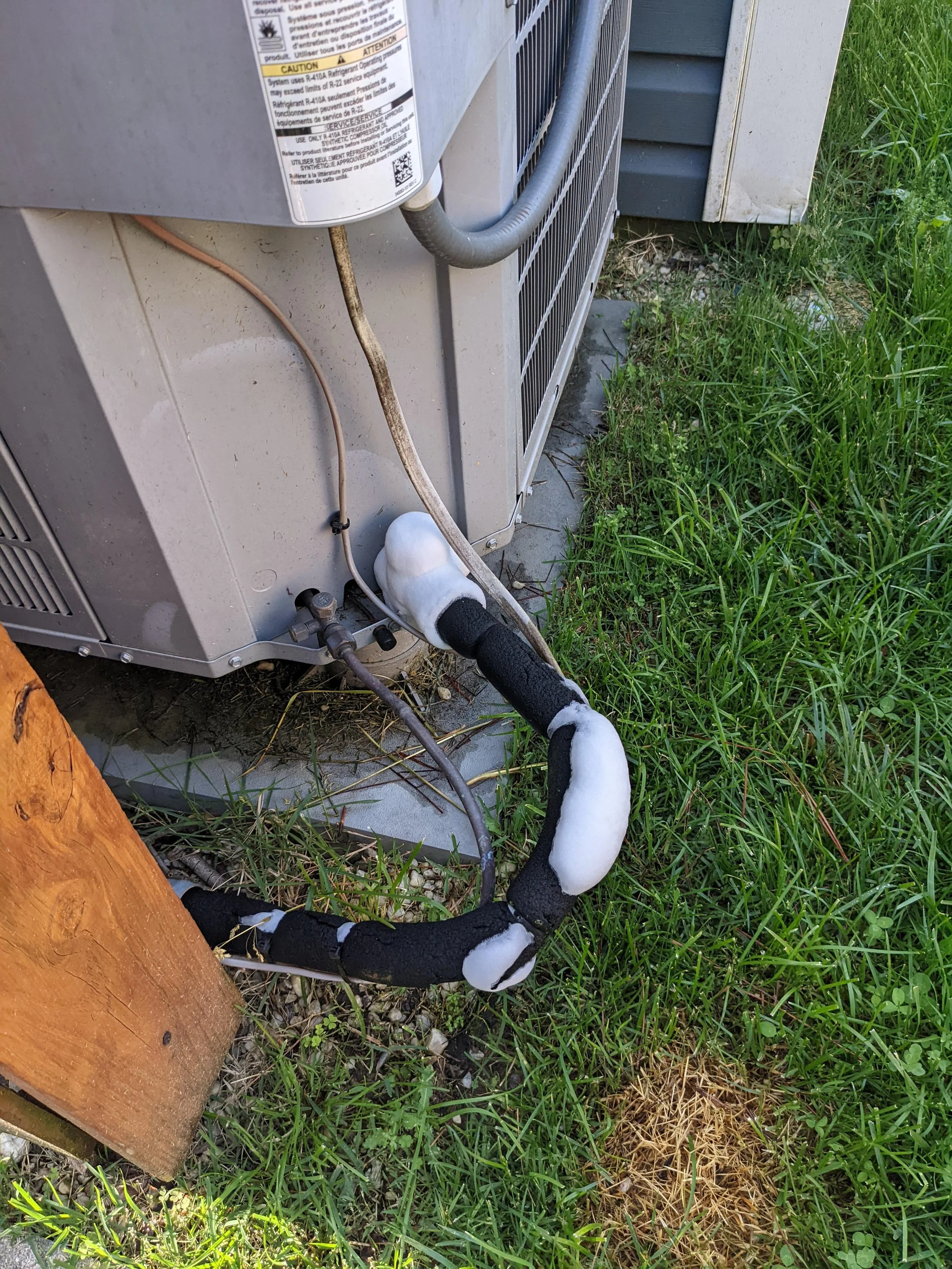
When the desert heat is at its peak, seeing ice on your air conditioner can feel like a strange miracle—but it is actually a sign of a serious mechanical failure. In Las Vegas, frozen evaporator coils or copper lines are common issues that require immediate attention to prevent permanent compressor damage.
Professional Help in Las Vegas
Don't let a frozen pipe turn into a melted budget. Amuni Air Conditioning and Heating specializes in diagnosing desert-specific AC failures.
Important: It can take 4 to 24 hours for a system to fully defrost. We recommend turning the system off as soon as you call so that our technicians can actually work on the components when they arrive.
Contact Us
Why Your AC Is Freezing in the Desert
It seems counterintuitive for an AC to freeze when it's 110°F outside, but the physics of cooling rely on a delicate balance of airflow and refrigerant. When that balance is disrupted, the temperature of the coils drops below freezing, turning humidity into ice.
1. Restricted Airflow
This is the #1 cause of frozen lines. If air isn't moving over your indoor coils, the refrigerant stays too cold.
Dirty Air Filters: Dust and Mojave sand can clog filters in weeks, not months.
Blocked Vents: Closing too many supply vents or covering return air grilles can suffocate the system.
Dirty Evaporator Coils: A layer of grime acts as insulation, preventing the refrigerant from absorbing heat from your home.

2. Low Refrigerant Levels
It’s a common myth that refrigerant just "runs out." If you are low, you have a leak.
When refrigerant levels drop, the pressure in the system falls.
3. Faulty Blower Motor
If the fan isn't spinning at the correct speed (or at all), there is no warm air passing over the coils to keep them from icing up. This often sounds like a humming noise coming from your indoor unit without any air coming out of the registers.
What To Do Right Now
If you notice ice on the copper pipes leading to your outdoor unit or inside the furnace closet, follow these steps immediately:
Turn the AC Off: Switch the thermostat from "Cool" to "Off." Running a frozen system can "slug" the compressor with liquid refrigerant, leading to a total system replacement.
Turn the Fan to "On": Switch the fan setting from "Auto" to "On." This forces warm air over the ice to help it melt faster.
Check the Filter: Replace it if it looks dark or dusty.
Call a Professional: A system will not "self-heal" from a freeze. Once the ice melts, the underlying cause (like a leak or a failing motor) still needs to be addressed.